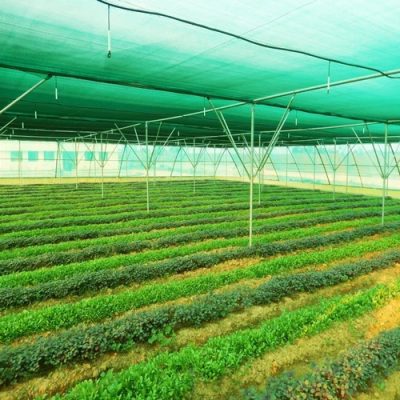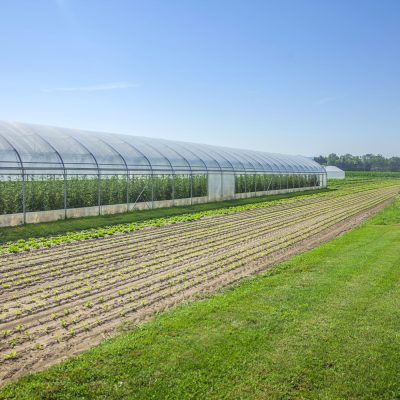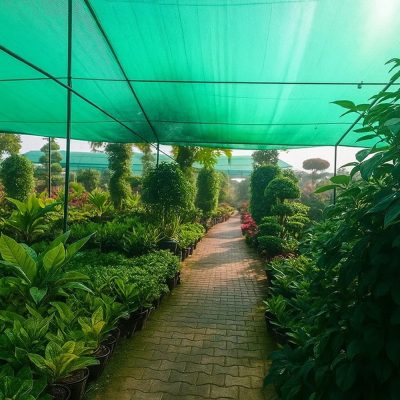
A crop shade net is a particularly constructed protective covering used in agriculture to control sunlight, temperature, and environmental conditions for crops. These nets, made of high-density polyethylene (HDPE) fabric, are commonly used in nurseries, greenhouses, and open fields to provide an optimal growing environment.
Crop shade nets work by filtering excess sunlight and reducing heat intensity, which helps prevent crop damage caused by harsh weather conditions such as extreme sunlight, heavy winds, and light rain. They also protect plants from pests and birds while improving overall crop quality and yield.
>Key Characteristics & Materials of Crop Shade Net:
>Key Characteristics:
Shade Percentage Variety:
Available in different shading levels like 35%, 50%, 75%, and 90%, allowing control over sunlight exposure depending
on crop type.
UV Stabilized:
Designed with UV protection to prevent degradation from sunlight and ensure long-lasting performance.
Temperature Control:
Reduces heat intensity and maintains a cooler environment, protecting crops from extreme temperatures.
>Materials Used:
High-Density Polyethylene (HDPE):
The primary material used due to its strength, flexibility, and resistance to chemicals and weather.
UV Stabilizers:
Added to the material to enhance durability and protect the net from harmful UV rays.
Monofilament Yarn:
Fine, single-strand plastic fibers that provide strength and uniform shading.